Hythe Beach
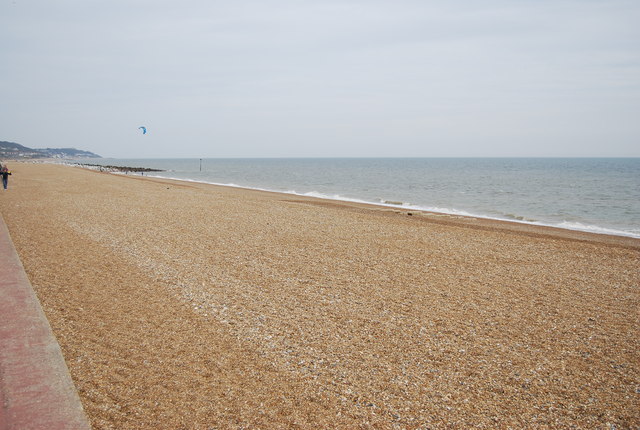
Hythe Beach is a shingle and pebble beach located on the southern coast of England, sitting on the western edge of Romney Marsh along the shores of the English Channel in the county of Kent. Despite the entry indicating South West England, the coordinates 51.07160, 1.08400 place this beach firmly in Kent, in the South East of England, between the town of Hythe and the broader Folkestone district. Hythe itself is an ancient Cinque Port town with a rich maritime heritage, and the beach forms an important part of its seafront character. The beach stretches along the coast in a relatively exposed position and is valued by locals and visitors alike as a quiet, unpretentious seaside destination that retains much of its traditional English coastal charm without the heavy commercialisation found at larger resorts nearby.
The beach at Hythe is predominantly a shingle and coarse pebble beach, which is entirely typical of this stretch of the Kent coastline. There is little to no sand at the waterline, and the beach shelf drops away at a reasonably steep gradient as is common with pebble beaches of this type. The surface underfoot consists of well-rounded grey and brown flint pebbles, and walking on it requires sturdy footwear. The beach is relatively wide and open to the sky, offering long views along the coast in both directions. To the east, the shingle gradually merges with the vast expanse of Dungeness, one of the largest shingle formations in Europe. The atmosphere is characteristically breezy and open, with the beach feeling spacious even when visitors are present.
The sea conditions at Hythe Beach reflect the wider character of the English Channel in this area. Tidal ranges along this stretch are moderate to significant, and the Channel is subject to strong tidal currents that run along the coastline. The water temperature is cool even in summer, typically ranging from around 16 to 19 degrees Celsius at the warmest, and considerably colder outside the summer months. The exposed nature of the beach means it can experience choppy conditions and swells when southwesterly or southerly winds pick up, though it is generally calmer than more exposed headland beaches. Swimmers should be aware of tidal movement and the steep pebble shelf, which can cause waves to dump suddenly and drag back hard on the return.
In terms of facilities, Hythe Beach is a relatively modest destination. The seafront promenade that runs behind the beach provides access to cafes, small restaurants, and refreshment options in the town itself, which is a short walk from the beach. Toilets are available in the town centre nearby. There is no dedicated lifeguard service on this beach, which is typical for many of the quieter English Channel pebble beaches, so swimming is unsupervised and visitors should exercise their own judgment about conditions. Parking is available along the seafront road and in nearby town car parks. The promenade and seafront area are reasonably accessible for those with mobility considerations, though the shingle beach surface itself presents challenges for wheelchairs and prams.
The best time to visit Hythe Beach is during the summer months of June through August, when the weather is most reliably pleasant and the sea temperature reaches its peak. The beach tends to attract a local crowd of families and dog walkers throughout the year but rarely becomes overwhelmingly busy in the way that larger resorts such as Bournemouth or Brighton do. Spring and autumn offer a quieter and in many ways more atmospheric experience, with dramatic skies over the Channel and the full exposure of the pebble and shingle landscape. Winter visits are bracing but rewarding for those who enjoy a windswept coastal walk, and the beach is popular with storm watchers when Channel weather systems move through.
Activities at Hythe Beach reflect the character of a traditional, relatively undeveloped English seaside beach. Swimming is possible but the lack of lifeguards and the nature of the pebble shelf mean it is best suited to confident swimmers. Sea fishing from the beach is a popular pursuit along this coastline, with anglers targeting species such as bass, cod, and flatfish depending on the season. Walking along the seafront and the broader coastal path is one of the great pleasures of a visit here, with the landscape opening up dramatically toward Dungeness in one direction and toward Sandgate and Folkestone in the other. Birdwatching is rewarding, particularly during migration seasons when a range of species move along the coast.
The surrounding landscape is striking and somewhat unusual. Hythe sits at the western edge of Romney Marsh, a flat and historically significant landscape reclaimed from the sea over many centuries. The beach and seafront look directly out over the English Channel toward France, which is visible on clear days. The Royal Military Canal, a Napoleonic-era defensive waterway, begins near Hythe and runs inland through the marsh, adding a layer of historical and geographical interest to the area. The low-lying hinterland gives the beach a very open, almost Dutch quality, with wide skies and a sense of exposure that differs markedly from cliff-backed beaches elsewhere on the Kent coast.
Practically speaking, Hythe Beach is straightforward to access. The town of Hythe is well connected by road, with the A259 coastal road running directly past the seafront. There is no entry fee to access the beach. Parking is available on the seafront and in nearby town car parks, with charges applying in the main car parks. The Romney, Hythe and Dymchurch Railway, a delightful narrow-gauge heritage railway, runs along the coast and terminates at Hythe, offering a charming alternative way to arrive. The beach is best avoided on peak summer weekends if you prefer a quieter experience, though it rarely reaches the extreme crowding of more famous resorts.
Hythe has a fascinating history as one of the original Cinque Ports, a medieval confederation of coastal towns in Kent and Sussex that provided ships and men to the Crown in exchange for special privileges. The town's maritime identity is deeply embedded in its character, and the beach has long been the frontline between the town and the sea. During the Second World War, this stretch of the Kent coast was fortified and prepared as a potential invasion front, and PLUTO, the remarkable Pipe Line Under The Ocean used to supply fuel to Allied forces after D-Day, had connections to this coastline. The nearby Lympne and Folkestone areas also carry significant layers of Roman and medieval history, making Hythe Beach part of one of the most historically layered stretches of the English coast.