Y Gaer
Y Gaer is a Roman auxiliary fort situated on the western edge of Brecon in Powys, Wales, occupying a commanding position above the confluence of the River Usk and the River Yscir. The site is one of the most significant Roman military remains in Wales and forms part of a broader complex that includes a recently developed museum and heritage centre. What makes it particularly notable is the rare combination of substantial visible Roman stonework — including the outlines of the fort's walls, gates, and internal buildings — alongside a thoughtfully curated modern visitor experience that brings the layers of history genuinely alive. The fort and its accompanying museum, managed by Brecon Beacons National Park Authority and Brecknock Museum, underwent major redevelopment in the 2010s, reopening in 2019 to considerable acclaim and winning recognition for the quality of its interpretation and design.
The Roman fort at Y Gaer was established in the late first century AD, likely around AD 75 during the campaigns of the Roman governor Julius Frontinus to pacify the Silures and other Welsh tribes. It was built to house a cavalry unit, and inscriptions discovered at the site confirm the presence of the Vettonian cavalry from the Iberian Peninsula, a unit of around five hundred horsemen whose home region lay in what is now western Spain and Portugal. The fort follows the classic playing-card shape of Roman military planning, with a defensive ditch and rampart enclosing a rectangular interior. It was occupied intermittently across several centuries, with evidence of rebuilding and adaptation suggesting it remained strategically relevant into the later Roman period. A Roman road connected Y Gaer to other forts across the region, including Caerleon and Neath, forming part of the web of military infrastructure the Romans used to hold down their newly won territory in Britannia.
Archaeologically, Y Gaer has a distinguished history of investigation stretching back to the early twentieth century. Sir Mortimer Wheeler, one of the towering figures of British archaeology, conducted extensive excavations here in the 1920s, uncovering much of the fort's layout and many of its artefacts. His work revealed the foundations of the headquarters building, the commander's house, and several barrack blocks, and the finds he recovered — including altars, inscriptions, and everyday objects — transformed scholarly understanding of Roman Wales. Later excavations in the 1980s and more recently in the twenty-first century have refined and expanded on Wheeler's findings. The altars discovered at the site, some of them dedicated by commanders to Jupiter and other Roman deities, are among the most evocative objects in the Brecknock Museum collection and speak directly to the personal religious lives of soldiers stationed far from home in a rainy Celtic landscape.
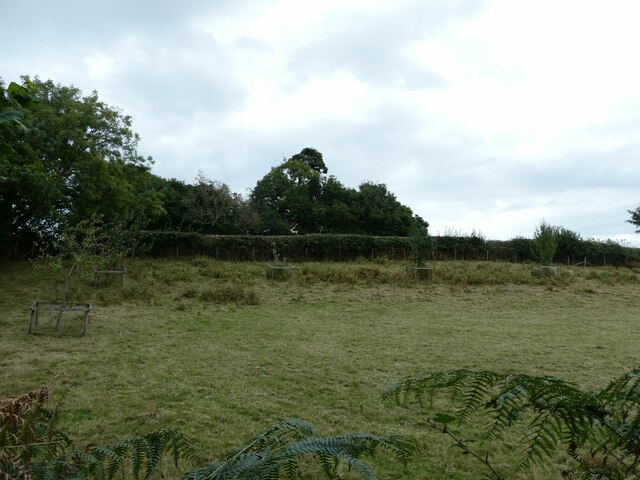
In person, Y Gaer has a quietly powerful atmosphere. The fort itself sits on a slight natural plateau, and although the walls no longer stand to any great height, the exposed stonework is extensive enough to give a convincing sense of the fort's scale and organisation. Walking around the site on a clear day, the eye is drawn constantly to the surrounding hills — the Brecon Beacons rising to the south and east, the gentler slopes of mid-Wales rolling away to the north — and the sense of a Roman soldier scanning these same horizons is not hard to conjure. The River Yscir runs nearby, adding a soft background murmur to the air. In spring and early summer, wildflowers push up through the grassland between the stone footings, and the whole place has an unmanicured, living quality that keeps it from feeling like a theme park.
The museum building integrated into the site is a piece of genuinely thoughtful contemporary architecture, designed to sit lightly in the landscape while providing a serious interpretive resource. Inside, artefacts from the site and the wider Brecon region are displayed alongside reconstructions and multimedia presentations that explain the daily life of a Roman auxiliary garrison. The collections include fragments of Roman tile, personal items, military equipment, and the celebrated altar stones. The juxtaposition of the ancient remains immediately outside and the carefully presented collections inside creates a satisfying loop for the visitor, moving between the physical and the intellectual with ease. The café and facilities are modest but functional, and the whole complex is well suited to visits of two to three hours.
Brecon itself, barely a kilometre to the east, offers a natural complement to any visit to Y Gaer. The town has a fine medieval priory church, an attractive market centre, and good access to the Beacons for those wanting to extend their day into the hills. The surrounding landscape belongs to the Brecon Beacons National Park and is among the most beautiful in Wales, with the distinctive flat-topped summits of Pen y Fan and Corn Du visible from many vantage points. The Monmouthshire and Brecon Canal runs through the area and offers pleasant walking. For those with a broader interest in Roman Wales, Y Gaer sits within a day's reach of Caerleon, with its extraordinary amphitheatre and baths, and the Roman gold mines of Dolaucothi further to the west.
Practically speaking, Y Gaer is straightforward to visit. It lies just off the A40 on the western outskirts of Brecon, and there is a dedicated car park at the site. The museum is free to enter, which is a genuine rarity for a heritage attraction of this quality, and the outdoor remains are accessible year-round during daylight hours. The site is reasonably accessible for visitors with mobility considerations, with a largely flat approach to the main areas of the fort. Opening hours for the museum building vary seasonally, so it is worth checking in advance. The best times to visit are late spring through early autumn, when the light is flattering and the surrounding landscape is at its most vivid, though the site has a melancholy winter beauty of its own when low mist hangs in the river valley.