Pentewan Beach
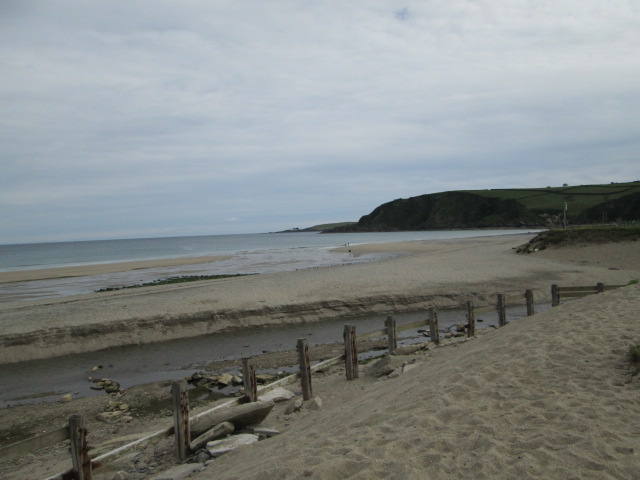
Pentewan Beach is a sheltered sandy beach located on the south Cornish coast, tucked into a small bay between the villages of Pentewan and Mevagissey in the St Austell Bay area of Cornwall. It sits at the mouth of the River Pentewan and is largely associated with the popular Pentewan Sands Holiday Park, which occupies much of the land immediately behind the beach. The beach is considered something of a hidden gem within the broader tourist circuit of Cornwall, drawing a loyal following of families and those seeking a quieter alternative to the more commercially prominent beaches further along the coast. Its sheltered position within St Austell Bay provides a degree of natural protection from the Atlantic swell that batters more exposed stretches of the Cornish coastline, making it a gentler and more predictable environment for casual visitors.
The beach itself is predominantly sandy, with fine to medium-grained pale golden sand that makes for comfortable walking and lounging. It extends for roughly 500 metres along the shoreline and offers reasonable width at low tide, though the usable beach area contracts noticeably as the tide rises. The setting feels enclosed and intimate rather than vast and dramatic, framed by low-lying land rather than towering cliffs. The mouth of the Pentewan Valley opens onto the beach, and the small river that runs through it creates a shallow channel across the lower beach that younger children tend to enjoy paddling in during the summer months. The overall atmosphere is relaxed and unhurried, with the holiday park giving the area a domestic, family-orientated character rather than a wild or scenic remoteness.
Water conditions at Pentewan are generally calmer than at more exposed Cornish beaches, owing to the sheltered nature of St Austell Bay. The bay faces broadly southward and is partially enclosed, which tends to reduce the height and power of incoming waves. This makes it relatively safe for swimming and paddling, particularly in summer when conditions are at their most benign. However, the beach is not patrolled by RNLI lifeguards on a permanent, dedicated basis in the same way as larger designated beaches, so visitors should exercise their own judgement about water safety. Sea temperatures along this stretch of Cornwall follow the typical pattern for the region, hovering around 15 to 17 degrees Celsius in the summer months of July and August, and dropping to around 9 to 11 degrees in winter. Tidal range in the area is moderate, with the beach changing character significantly between high and low water.
The facilities at Pentewan Beach are closely tied to the Pentewan Sands Holiday Park, which operates the site commercially. Within or adjacent to the holiday park there are toilet and shower facilities, a shop, and café provisions catering primarily to residents and day visitors. Equipment hire, including kayaks and other watersports gear, has been available through the holiday park operation, which is one of the draws for active visitors looking to get on the water. Parking is available associated with the holiday park site, and there is also a small public car park nearby, though capacity can be limited during peak summer periods. Accessibility to the beach itself is reasonably straightforward, with the flat terrain around the valley mouth making it manageable for those with pushchairs, though the beach surface itself presents the usual challenges of soft sand.
The best time to visit Pentewan is during the summer months from June through to early September, when the weather, sea temperatures and daylight hours are all at their most favourable. July and August bring the largest crowds, particularly as the holiday park fills to capacity, so visiting on weekdays or arriving early in the morning is advisable for those seeking a quieter experience. The beach is pleasant in late spring and early autumn when the weather can still be mild but visitor numbers are substantially lower. Winter visits offer a completely different experience — the beach is largely empty and can be atmospherically beautiful on calm days, but facilities will be reduced or closed and the weather can be challenging. As with any tidal beach, checking tide times before a visit is sensible, particularly for families who want to make the most of the low-tide beach width.
In terms of activities, swimming and paddling are the primary draws in summer given the generally calm water conditions. Kayaking and canoeing are well suited to this sheltered bay environment, and the holiday park's hire facilities make this accessible to those without their own equipment. The flat sandy beach is appropriate for beach games, building sandcastles and general family recreation. The surrounding area also offers pleasant walking, with footpath connections into the Pentewan Valley along the old mineral tramway route, which follows the course of the former railway used to transport china clay from the St Austell area to the coast. This trail connects through to St Austell and offers an engaging excursion for those interested in the industrial heritage of the region.
The landscape immediately surrounding Pentewan Beach is relatively low-lying compared to much of the dramatic cliff scenery for which Cornwall is famous. The valley behind the beach is green and wooded, with the gentle river providing a pastoral quality that contrasts with the open sea. To the north lies the broader hinterland of the china clay country centred on St Austell, and to the south the coast rises as it approaches the headlands around Mevagissey, which sits about a mile and a half to the south and offers a picturesque working fishing harbour well worth visiting in conjunction with a trip to Pentewan. Black Head, a prominent headland, lies further to the south and is accessible on foot via the South West Coast Path.
Pentewan has a fascinating industrial history rooted in the china clay trade that was central to Cornwall's economy from the eighteenth century onward. The village and its small harbour were developed specifically to serve as an export point for china clay, and the Pentewan Railway, a narrow-gauge line, was constructed in 1829 to carry clay from the St Austell area down to the coast. The harbour silted up progressively with waste from the clay workings — a persistent and ultimately fatal problem — and the railway and commercial harbour operations eventually ceased in the early twentieth century. The silting that plagued the harbour is also part of what contributed to the beach's relatively sandy and flat character today, making it somewhat wider than it might otherwise naturally be. This layered industrial past gives Pentewan a depth of historical interest that goes well beyond its appeal as a leisure beach, and the Pentewan Valley trail preserves traces of this heritage in the landscape.
---