Polzeath Beach
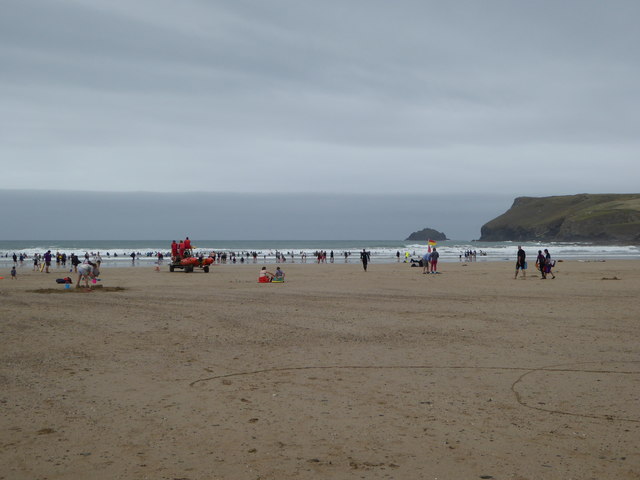
Polzeath Beach is a celebrated sandy cove on the north Cornish coast, tucked within the Camel Estuary area on the western shore of the Camel estuary mouth, near the village of Polzeath in the parish of St Minver in Cornwall. It is one of the most popular beaches in North Cornwall, drawing visitors from across the United Kingdom and beyond who are attracted by its reliable surf, family-friendly atmosphere, and the wild, open beauty typical of this stretch of Atlantic-facing coastline. The beach sits in a sheltered but wave-exposed bay framed by dramatic headlands, and its combination of accessible amenities and genuine natural grandeur makes it a destination that appeals equally to surfers chasing swells, families spending long summer days on the sand, and walkers following the South West Coast Path above the cliffs.
The beach itself is composed of fine golden-brown sand that extends generously at low tide, becoming a wide, flat expanse ideal for ball games, castle building, and relaxed walking. At high tide the sand is considerably reduced, with the sea pressing closer to the low dunes and sea grass that back the beach. The bay faces northwest, which gives it an open, airy, slightly raw character even on calm days, and the sand tends to be clean and well-washed by the Atlantic. There are some rocky outcrops at the northern and southern edges of the bay, particularly around the headland known as Pentire Point to the north and around the rocks near New Polzeath to the south, and these provide interesting rock pooling opportunities at low water. The beach feels genuinely expansive at low tide and can accommodate large numbers of visitors without feeling uncomfortably crowded, though midsummer weekends test that capacity.
The water at Polzeath has the characteristics common to north-facing Cornish beaches — cool even in high summer, with sea temperatures typically reaching around 16 to 18 degrees Celsius in July and August, and dropping to 8 or 9 degrees in winter. The beach is exposed to Atlantic swells generated far to the northwest, and it receives consistent surf throughout the year, making it one of Cornwall's better-known beginner and intermediate surfing spots. Waves are generally of a manageable size for learners, though the beach can produce powerful and fast-breaking surf during larger Atlantic storms, particularly in autumn and winter. There is a moderate tidal range, and rip currents can develop, particularly near the edges of the bay and around rocky outcrops, so swimmers are advised to stay within the flagged areas monitored by lifeguards during the supervised season.
Facilities at Polzeath are well-developed by Cornish standards. The Royal National Lifeboat Institution and surf lifesaving teams provide lifeguard cover during the main summer season, generally from late May through to September, with patrol flags indicating safe swimming zones. There are public toilets near the beach access point, and a collection of cafes, beach shacks, and surf shops line the lower road and car park area, offering everything from hot pasties and ice cream to wetsuit hire and surfboard rental. Several established surf schools operate from the beach, making it an excellent place for beginners to take lessons. The car park above the beach charges a seasonal fee and can become extremely busy in July and August, with queues forming during peak holiday weeks.
The best time to visit Polzeath depends entirely on what you are seeking. Families with children will find the peak summer months of July and August ideal for warmth, calm weather, and the full suite of facilities, though these months bring the heaviest tourist traffic. Surfers tend to prefer the shoulder seasons of April through June and September through October, when Atlantic swells are more consistent, crowds are thinner, and the light has a particular quality that photographers also appreciate. Winter visits offer a dramatically different but deeply rewarding experience — the beach is often deserted, storms can produce spectacular wave action, and the raw power of the Atlantic along this coast becomes vividly apparent. Tides are crucial to planning any visit: the wide sandy beach is most accessible and appealing around mid to low tide, and consulting local tide tables before arriving is strongly advised.
Surfing is the dominant sporting activity and shapes much of the culture around the beach. Polzeath has been a significant surf destination since the sport took hold in Cornwall during the 1960s, and surf schools here have introduced thousands of people to wave riding over the decades. Beyond surfing, the beach is suitable for swimming in the flagged areas, kayaking and stand-up paddleboarding in calmer conditions, and coastal walking. The South West Coast Path runs along the cliffs above the bay, offering superb walking routes in both directions — south towards Rock and the Camel Estuary, and north along the cliff tops past Pentire Point and on towards Port Quin and Port Isaac. The clifftop paths afford magnificent views back over the bay and out across the open Atlantic.
The surrounding landscape is dominated by the dramatic headland of Pentire Point to the north, a National Trust-owned peninsula of ancient volcanic rock that juts into the sea and offers some of the most scenic cliff walking in North Cornwall. The headland is home to rare coastal flora and has a wild, ancient character that contrasts with the more populated beach below. To the south, the village of Rock sits across the Camel Estuary, reachable by a passenger ferry from nearby Padstow and associated with a rather more affluent Cornish holiday scene. The low dunes and coastal grassland behind Polzeath Beach itself support typical dune vegetation, and the estuary mouth nearby creates a varied and ecologically rich coastal environment. Greenaway Beach, a smaller and less accessible sandy cove, lies just around the headland to the north and can be reached on foot at lower tides.
From a practical standpoint, the main access to Polzeath is via the B3314 road from Wadebridge, turning off toward the village of Polzeath. The car park is pay-and-display and can become completely full by mid-morning on summer peak days, so arriving early — before 9am — is advisable in July and August. There is no beach entry fee beyond the parking charge. The walk from the car park to the beach is short and relatively flat, making it accessible to most visitors, though the terrain is not formally adapted for wheelchair users across all sections. Public transport access is limited, with seasonal bus services from Wadebridge being the primary option for those without cars.
Polzeath carries a modest but genuine cultural history. The beach and its surrounding area were beloved by Sir John Betjeman, the Poet Laureate, who spent many childhood holidays in North Cornwall and whose affection for this coastline is evident in his poetry. Betjeman is buried at St Enodoc Church in nearby Trebetherick, a hauntingly beautiful Norman church that was once partially buried by sand dunes and had to be excavated, and which sits within a golf links just a short walk from the beach. The Betjeman connection has given the area a literary and nostalgic dimension that enriches a visit for those aware of it. The wider area around the Camel Estuary and Padstow has also become associated with food culture, partly through Rick Stein's long-established culinary presence in Padstow, and the combination of great surf, natural beauty, and regional food identity makes Polzeath and its environs one of the more complete holiday destinations in the southwest of England.