Coldingham Bay Beach
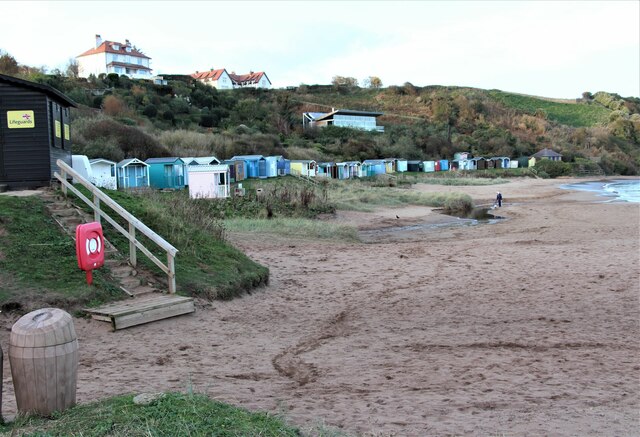
Coldingham Bay Beach is a small but strikingly beautiful sandy cove situated on the Berwickshire coast of southeastern Scotland, just a short distance from the village of Coldingham and the nearby clifftop settlement of St Abbs. It lies within the broader Berwickshire Coastal Path area and is considered one of the finest beaches on the Scottish east coast south of Edinburgh. Despite its relatively compact size, the bay punches well above its weight in scenic terms, drawing visitors from across southern Scotland, Northumberland, and beyond who come for its clean waters, dramatic surroundings, and relatively uncrowded atmosphere compared to beaches closer to major urban centres. The bay sits within an area of outstanding natural beauty, and its proximity to St Abbs Head National Nature Reserve — one of Scotland's most important marine reserves — gives it an ecological significance that adds depth to any visit.
The beach itself is a crescent of pale golden sand backed by low grassy slopes and, in parts, gently shelving dunes and scrubby coastal vegetation. It is not a vast expanse — the bay is modest in width, perhaps 150 to 200 metres across at its broadest point — but the sand is generally clean and firm, making it pleasant for walking, and the sheltered arc of the cove gives it a tucked-away, intimate quality. At low tide the beach widens considerably, revealing stretches of wet sand ideal for exploration, and rocky outcrops appear at each end of the bay where the cliffs begin. The surrounding geology is ancient and visually striking, with dark volcanic and sedimentary rock forming rugged headlands that frame the beach on both sides and give the whole scene a wild, elemental character even on calm days.
The sea at Coldingham Bay is the North Sea, and as such it carries the characteristic cold temperatures associated with Scotland's eastern coastline. Water temperatures typically range from around 6 to 8 degrees Celsius in winter and may reach 14 to 16 degrees Celsius at the height of summer, though even peak summer temperatures feel bracingly cold by most standards. The bay is moderately sheltered from the prevailing westerly winds, but North Sea swells can produce modest surf and chop, and on days of strong easterly or northeasterly winds the sea can become rough quite quickly. The tidal range along this coast is significant — approximately four to five metres between low and high tide — meaning visitors should pay attention to the tide when exploring rock pools or walking along the base of the cliffs at either end of the cove. The beach is generally considered safe for swimming in calm conditions, though the cold temperature and occasional currents mean that wetsuit use is strongly advisable.
Coldingham Bay is one of those beaches that benefits from a loyal local community and a well-established reputation as a recreational destination, which means it comes with a reasonable set of amenities for a beach of its size. There is a car park reasonably close to the beach, accessed via the road through Coldingham village, with the descent to the bay itself being straightforward though slightly steep in the final stretch. Toilet facilities have historically been available at or near the beach. A small cluster of facilities including a surf school and equipment hire operation has been based at the bay for many years, reflecting the beach's particular popularity with watersports enthusiasts. There is no full-service café directly on the beach, but light refreshments have at times been available nearby, and the villages of Coldingham and St Abbs — each only a short drive away — offer pubs, cafés, and accommodation.
The beach is particularly well known among the watersports community of eastern Scotland and northern England. Surfing is possible here when North Sea swells are running, and the bay's relatively consistent conditions have supported a surf school presence over many years, making it accessible to beginners. Sea kayaking is popular, with the dramatic coastline around St Abbs Head offering excellent paddling routes for those with experience. Rock pooling is rewarding given the richly biodiverse rocky margins of the bay, which benefit from the protected status of the adjacent marine reserve. Snorkelling and scuba diving are practised here and in the surrounding waters, with St Abbs Head being regarded as one of the best cold-water dive sites in the British Isles due to the clarity of the water and the abundance of marine life. The Berwickshire Coastal Path passes through the area and allows walkers to explore the clifftops above the bay with magnificent views in both directions along the coast.
The landscape surrounding Coldingham Bay is some of the most dramatic on the east coast of Scotland. To the north, the volcanic cliffs of St Abbs Head rise steeply from the sea, forming a headland that is visible for miles and which hosts a nationally important seabird colony including kittiwakes, guillemots, razorbills, and fulmars. The cliffs directly flanking the bay are not as high as those further north but are still imposing, streaked with colour and pocked with ledges that support nesting birds in season. The inland hinterland consists of rolling agricultural land typical of Berwickshire — fertile, green, and relatively open — while the coastal fringe maintains a wilder, more rugged character. In late summer the clifftop vegetation includes heather and sea pinks, and the combination of warm golden light, dark rock, turquoise-green sea, and pale sand makes the bay a favourite subject for photographers, particularly in the soft light of morning and evening.
In terms of seasonal character, Coldingham Bay is at its most popular during the summer months of July and August, when families and watersports visitors arrive in the greatest numbers. Even then, it rarely feels overwhelmed, and a midweek visit will often provide a relatively peaceful experience. Spring and early autumn can be excellent for walking, wildlife watching, and photography, with clearer light and smaller crowds than peak summer. Winter brings powerful North Sea storms at times, and the beach takes on a completely different character — elemental, grey, and spectacular — that draws its own devotees. The car park and access road can become busy on warm summer weekends, and arriving early in the morning is the best strategy for securing parking and enjoying the beach in relative tranquillity.
The area around Coldingham and St Abbs carries considerable historical and cultural weight. St Abbs itself takes its name from Saint Aebbe, a seventh-century Northumbrian princess who founded a monastery on the headland, and the area has deep roots in early medieval Christian history. The broader Berwickshire coast has seen centuries of fishing activity, and the small harbours and boat-related heritage of nearby villages speak to that maritime tradition. Cold water diving at St Abbs gained international recognition partly through the work of conservation organisations and underwater photographers who documented the richness of the marine reserve's ecosystem, bringing scientific and public attention to a stretch of coastline that might otherwise have remained relatively obscure. The beach and its surroundings were also used as a filming location for the 2019 Marvel Studios film Avengers: Endgame, with the clifftop landscape near St Abbs doubling for a remote fictional setting — a fact that has added an unexpected strand of popular culture interest to visits in recent years.