Druidston Beach
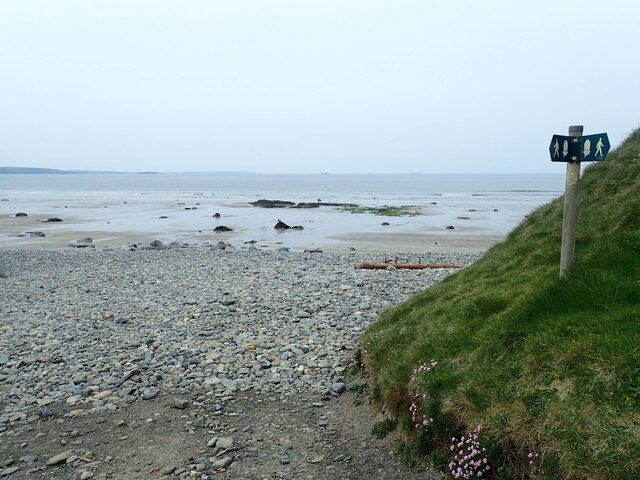
Druidston Beach, also known as Druidston Haven, is a hidden gem tucked along the Pembrokeshire Coast in Wales, sitting within the Pembrokeshire Coast National Park — one of only three coastal national parks in the United Kingdom. Accessible only via a steep path and largely unknown to mass tourism, this beach has earned a devoted following among those who value solitude, natural beauty, and an unspoiled stretch of coastline. Its relative inaccessibility means that even in the height of summer it retains a wild, unhurried quality that is increasingly rare along the British coastline. The beach lies between the more famous Broad Haven to the south and Nolton Haven to the north, yet it manages to feel entirely apart from both.
The beach itself is a broad, sweeping arc of golden-brown sand backed by low, eroding clay and sandstone cliffs. At low tide the beach opens out generously, revealing a wide expanse of firm, ribbed sand that is excellent for walking and play, while at high tide the sea can come close to the cliff base, significantly reducing the usable beach area. The sand is relatively fine and golden in colour, typical of the Pembrokeshire coastline, and the beach is flanked on either side by rocky outcrops and wave-cut platforms that are rich in rock pools. The cliffs above are covered in gorse and rough coastal grasses, giving the setting a distinctly raw and elemental quality. There is a strong sense here of standing at the edge of something ancient and largely undisturbed.
The sea at Druidston Haven is influenced by the waters of St Brides Bay, a large, open southwest-facing bay that catches Atlantic swell. This exposure means the beach can produce reasonable surf conditions, particularly in autumn and winter when Atlantic storms drive waves of moderate size onto the shore. The tidal range in this part of Pembrokeshire is considerable, among the highest in the world due to the Bristol Channel's funnel effect, and this means the waterline can move dramatically over the course of a few hours. Sea temperatures follow typical Welsh patterns, reaching around 16 to 18 degrees Celsius in late summer and dropping to 8 to 10 degrees in winter. The beach is unpatrolled and there are no lifeguards stationed here, so swimmers should exercise caution, particularly around the rocky outcrops at either end of the bay and during periods of strong swell or rip currents that can develop at low tide across the open sand.
Facilities at Druidston Haven are extremely limited, which is part of its appeal for those seeking an escape from the heavily managed beach experience. There are no toilets, no cafes, no beach huts and no equipment hire at the beach itself. The one notable exception to this austerity is the Druidston Hotel, a characterful, independent hotel perched at the clifftop above the beach, which has long been regarded as something of an institution in Pembrokeshire. The hotel, which has a bohemian and welcoming reputation, offers food and drinks, and its presence gives the beach a loose association with civilisation without overwhelming the wild feeling of the cove below. Parking is available in a small car park near the hotel, accessed via a narrow lane from the village of Broad Haven or from the B4341. The path down to the beach is steep and uneven, which makes access difficult for those with limited mobility or young children in pushchairs.
The best time to visit Druidston Haven depends very much on what you are seeking. In summer, particularly during July and August, the beach can attract a moderate number of visitors, though it never reaches the crowded conditions of Broad Haven or Tenby. Spring and early autumn offer excellent conditions for walking and coastal exploration, with fewer visitors and often dramatic skies and light. Winter visits are a different experience entirely, with powerful Atlantic storms sending waves crashing against the rocky outcrops and the clifftops lashed by wind — an exhilarating but demanding experience for those properly equipped. Tide times are critical when planning a visit, both for safety and for maximising the beach area available; checking local tide tables before setting out is strongly advisable given the significant tidal range.
Activities at the beach are varied and naturally suited to its wild character. Swimming is popular in calmer summer conditions, and the open southwest-facing aspect makes Druidston Haven an occasional destination for surfers and bodyboarders seeking the Atlantic swell. Sea kayaking and paddleboarding are practised here by those who bring their own equipment. The rocky platforms at either end of the beach are rewarding for rock pooling, and the coastal path running along the clifftops connects the beach into the wider Pembrokeshire Coast Path, which is one of the finest long-distance walking routes in Britain. The dramatic cliffs, the wide sky, the shifting light over St Brides Bay and the relative solitude make Druidston Haven a favourite location for photographers, particularly in the golden hours around sunrise and sunset.
The surrounding landscape is quintessentially Pembrokeshire: layers of ancient folded and faulted rock exposed in the cliff faces, with strata tilted dramatically by geological forces over hundreds of millions of years. The cliffs in this area are composed largely of Carboniferous limestone and older sandstones, and the coastal erosion that constantly reshapes them has created an intricate, beautiful and ever-changing shoreline. Inland, the landscape is a mix of gently rolling farmland, hedgerow-lined lanes and small settlements. The entire stretch of coast here lies within the national park and is subject to careful conservation management. The headlands to either side of the beach offer excellent elevated viewpoints across St Brides Bay, where seabirds including choughs, peregrines and gannets are regularly seen.
In terms of practical access, the beach is reached via a small lane running west from the B4341 between Broad Haven and Haverfordwest. The lane narrows considerably and ends near the Druidston Hotel, where a small, informal car park serves visitors. From there a footpath descends the cliff to the beach. There is no entry fee and no formal management of the beach site. The nearest towns with shops, fuel and accommodation are Broad Haven, approximately two kilometres to the south, and Haverfordwest, the county town of Pembrokeshire, around ten kilometres to the east. Broad Haven also has public toilets and a small selection of cafes and shops, making it a sensible first stop before walking or driving north to Druidston.
The history of the Druidston area is woven into the broader tapestry of Pembrokeshire, a county that has been inhabited continuously since Neolithic times. The name Druidston is thought to derive not from ancient druids, as is sometimes romantically supposed, but from a Norman settler named Drue or Drogo, with the suffix indicating his settlement or estate — a pattern common to many Pembrokeshire place names that reflect the Norman colonisation of the region following the conquest. The area around St Brides Bay has a rich maritime history, with numerous shipwrecks on the rocky coastline recorded over the centuries. The Druidston Hotel itself has its own story, having been rescued and reimagined by its owners as a distinctly individual retreat that resists the conventions of mainstream hospitality, and it has built a loyal following among artists, writers and walkers who return year after year.