Carlyon Bay Beach
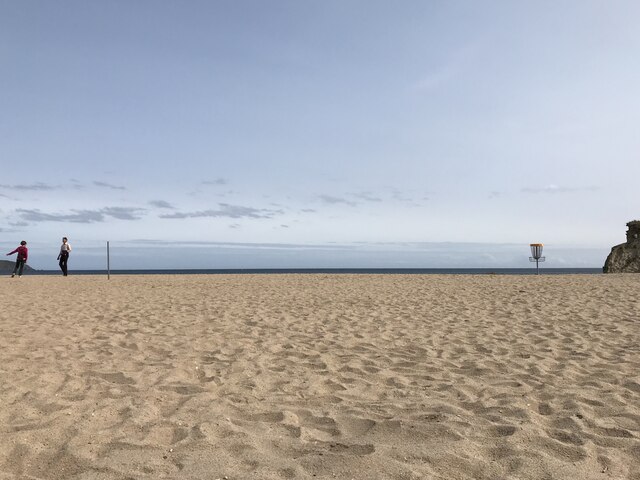
Carlyon Bay is a broad, south-facing sandy beach located on the eastern edge of St Austell Bay in Cornwall, England, sitting between the headland of Black Head to the west and the smaller promontory near Par to the east. It is one of the larger beaches in the St Austell area and has long served as a popular family destination for visitors to mid-Cornwall, offering a generous stretch of open sand that becomes particularly inviting during the warmer months. The beach sits within easy reach of the town of St Austell itself and has historically been associated with the nearby Carlyon Bay Hotel, a grand establishment that has defined much of the area's character for decades. While it lacks the dramatic fame of some of Cornwall's more celebrated surf beaches to the north, Carlyon Bay holds its own as a quieter, more relaxed alternative with genuine appeal for families, walkers, and those seeking a calmer Cornish seaside experience.
The beach itself is predominantly sandy, with wide, flat expanses of pale golden to buff-coloured sand that are revealed considerably at low tide. The foreshore is generally clean and open, making it comfortable for walking and for children to play on. At higher tidal states the beach narrows noticeably, and in some areas rocky outcrops and scattered pebbles appear toward the upper shore and at the edges of the bay, giving the beach a slightly mixed character at its margins. The overall impression is of a sheltered, moderately wide beach that, while not spectacularly dramatic in the way of Cornwall's Atlantic-facing shores, offers an accessible and pleasant environment. The hinterland immediately behind the beach has seen considerable development interest over the years, with hotel grounds and residential buildings forming a backdrop rather than the wild dunes or cliffs one might find elsewhere on the Cornish coast.
St Austell Bay is relatively well sheltered compared to Cornwall's north coast, and Carlyon Bay benefits from this protection. The sea here tends to be calmer than at beaches like Fistral or Perranporth, with waves that are generally more modest and suited to family swimming rather than serious surfing. That said, the bay is still tidal and open water, and Cornwall's characteristic south-westerly swells can produce lively conditions during storms or periods of unsettled weather. Sea temperatures in Cornwall follow the typical pattern for the south-west of England, reaching roughly 16 to 18 degrees Celsius in midsummer and dropping to around 9 to 11 degrees in winter. The tidal range in St Austell Bay is moderate to significant, and at low tide the beach extends considerably, while at high tide the usable beach area is much reduced. Swimmers should always be mindful of tidal conditions and any localised currents.
In terms of facilities, Carlyon Bay has historically offered a reasonable level of amenity tied in large part to the nearby Carlyon Bay Hotel and its grounds. Visitors have generally been able to find parking in the area, and there is pedestrian access to the beach via paths from the surrounding roads. However, it is worth noting that the beach and its immediate surroundings have been at the centre of a long-running and contentious planning dispute concerning large-scale residential development on the land behind the beach, which has at times affected the facilities and amenities available. The situation around development has evolved over many years and has left some uncertainty about precisely what infrastructure is in place at any given time. Visitors are advised to check current information before travelling, as facilities such as toilets, cafes, and formal parking areas may vary depending on the status of the site.
The best time to visit Carlyon Bay is broadly the same as for most Cornish beaches: late spring through early autumn offers the most reliable weather, warmest sea temperatures, and longest daylight hours. July and August bring the greatest numbers of visitors to Cornwall generally, and while Carlyon Bay is not as intensely crowded as some of the county's most famous beaches, it will naturally be busier during school holiday periods. Visiting in June or September often provides a pleasant balance of decent weather and reduced crowds. The beach can also be extraordinarily atmospheric in the off-season, when winter storms roll across St Austell Bay and the coastline takes on a wilder character, though swimming would not be advisable and visitors should exercise caution near the water's edge in rough conditions.
Activities at Carlyon Bay centre primarily on the pleasures of a traditional sandy beach: swimming in calm conditions, building sandcastles, beach walking, and simply relaxing. The calmer nature of the bay compared to Cornwall's north coast surf beaches means it is less attractive to experienced surfers, though bodyboarding can be enjoyable in moderate swell. The surrounding coastal path offers walking opportunities, and the broader St Austell Bay area provides a scenic backdrop for photography, particularly in the soft morning and evening light when the bay takes on a warm glow. Rockpooling at the edges of the beach where rocky areas emerge at low tide can be rewarding, particularly for children.
The surrounding landscape is characteristic of this part of Cornwall, with low green headlands framing the bay and the gently rolling countryside of mid-Cornwall visible inland. The white conical tips of the china clay industry, for which the St Austell area is historically famous, can sometimes be glimpsed in the distance, a distinctive and somewhat surreal feature of this corner of Cornwall that sets it apart visually from the wilder western parts of the county. The coastal path in the vicinity connects Carlyon Bay to other points along the bay, including Par Sands to the east, and offers pleasant walking with views across the water.
One of the most significant stories associated with Carlyon Bay in recent decades is the long-running planning saga over the redevelopment of land behind the beach, particularly the site associated with the Carlyon Bay Hotel and the former holiday village. Proposals for large-scale housing development on these grounds generated enormous local controversy over many years, pitting development interests against local campaigners and environmental groups concerned about the impact on beach access and the character of the coastline. This dispute became something of a cause célèbre in Cornish planning circles and attracted national attention at various points, making Carlyon Bay notable not just as a beach destination but as a focal point for debates about development, access, and the future of Cornwall's coastline.
Practically speaking, Carlyon Bay is accessed from the A390 and surrounding roads near St Austell, with the beach lying roughly two to three kilometres south of the town centre. The village of Charlestown, with its famous historic harbour and tall ships, lies a short distance to the west along the coast and is well worth combining with a visit to Carlyon Bay. There are no entry fees for the beach itself. Visitors arriving by car should plan their parking in advance, particularly in peak season, as the situation around parking has been affected by the ongoing development questions in the area. Public transport connections to the immediate beach area are limited, and most visitors arrive by car.