Catrake Force
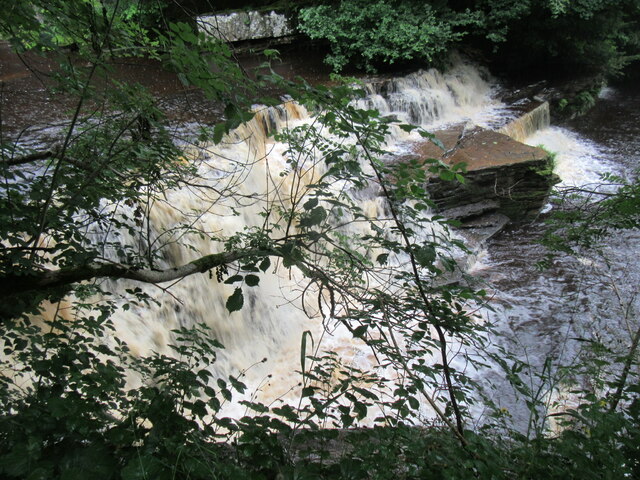
Catrake Force is a dramatic waterfall on the River Swale located just downstream of the village of Keld in upper Swaledale, North Yorkshire. The falls consist of a substantial drop where the river plunges over a series of limestone steps in a powerful cascade, particularly impressive after rainfall when the Swale is in spate. The waterfall forms part of a remarkable sequence of cataracts in this stretch of the river, with the water tumbling through a narrow rocky gorge carved into the Yoredale Series of limestone, sandstone and shale that characterizes the geology of the Yorkshire Dales. The name "Force" derives from the Old Norse word "foss" meaning waterfall, reflecting the Viking heritage of this part of northern England. The waterfall's character varies considerably with water levels, from a thundering torrent in winter and after heavy rain to a more modest flow during dry summer periods, though the underlying structure of ledges and rocky outcrops remains striking throughout the year.
The River Swale rises high on the flanks of High Seat and Birkdale Common in the Pennines, making it one of the northernmost of the major Yorkshire Dales rivers. It flows eastward through some of the most remote and beautiful upland scenery in England, passing through Swaledale before eventually joining the River Ure near Boroughbridge to form the River Ouse. The catchment area encompasses wild moorland, traditional hay meadows, and stone-walled pastures that give Swaledale its distinctive character. By the time the Swale reaches Keld and Catrake Force, it has already descended considerably from its source and carries significant volume, particularly as it gathers tributaries from the surrounding fells. The river's energy at this point, combined with the resistant limestone bedrock, has created the dramatic waterfall landscape for which this area is justly famous.
Keld itself is a small hamlet that has long served as an important crossing point and meeting place in upper Swaledale. The area around Catrake Force has been walked and admired for centuries, though detailed historical records specific to the waterfall are limited. The landscape bears evidence of industrial activity from the lead mining era that dominated the economy of the upper dales from medieval times through to the late nineteenth century. While Catrake Force itself was not directly exploited for industrial purposes, the surrounding area contains remnants of the mining industry including spoil heaps, levels, and the ruins of smelt mills. The waterfall would have been a familiar sight to the miners and their families who lived and worked in this harsh upland environment. Like many waterfalls in the Yorkshire Dales, Catrake Force has attracted artists, writers and early tourists since the Romantic period, when dramatic natural features became celebrated subjects for aesthetic appreciation.
The landscape surrounding Catrake Force exemplifies the character of upper Swaledale, with flower-rich hay meadows giving way to rougher pasture and eventually open moorland on the higher ground. The limestone geology supports a diverse flora, and the area is designated as part of the North Pennines Area of Outstanding Natural Beauty. The river corridor and its associated woodland and scrub provide habitat for a variety of bird species including dippers, grey wagtails, and common sandpipers that are characteristic of upland streams. The surrounding meadows, when managed traditionally, burst into color in early summer with buttercups, wood cranesbill, and other wildflowers. Overhead, buzzards and ravens are frequently seen, while the moorland supports red grouse, curlew and lapwing. The swift-flowing waters of the Swale itself support populations of brown trout and other fish adapted to these upland conditions.
Access to Catrake Force is excellent as the waterfall lies directly on the popular Pennine Way, Britain's first long-distance footpath which passes through Keld. Walkers can reach the falls easily from the village, with the path from Keld descending to follow the River Swale downstream. The falls can be viewed from the path, though care should be taken as the rocks can be slippery, particularly when wet. Many visitors combine a visit to Catrake Force with viewing the other waterfalls in the immediate area, including Kisdon Force and East Gill Force, making for a spectacular circular walk. Keld itself offers limited facilities including a small seasonal café and public toilets, while parking is available in the village, though spaces are limited and visitors are encouraged to arrive early during peak season or use public transport where possible.
The waterfalls around Keld, including Catrake Force, are increasingly popular with photographers seeking to capture the dramatic interplay of water and rock in this archetypal Yorkshire Dales landscape. The falls are accessible year-round, with each season offering different qualities: the fuller flows of winter and spring provide drama and power, while summer's lower water levels reveal more of the underlying rock architecture. Autumn brings color to the surrounding woodland. The proximity to the Pennine Way means that the falls are seen by many long-distance walkers passing through, though day visitors also form a significant proportion of those who come to appreciate this natural feature. The area's combination of natural beauty, accessibility, and the presence of multiple waterfalls in close proximity makes it one of the most rewarding waterfall locations in the Yorkshire Dales National Park.