Narberth Castle
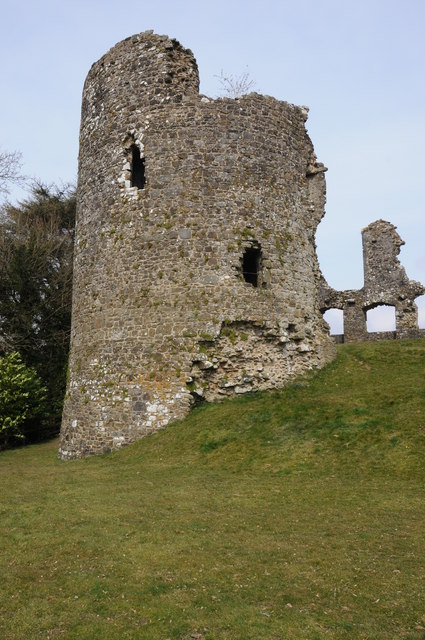
Narberth Castle is a ruined medieval fortification situated in the market town of Narberth in Pembrokeshire, southwest Wales. The castle occupies a prominent elevated position overlooking the town, and while it survives only as a partial ruin, it remains one of the most historically resonant and atmospheric sites in this corner of Wales. It is managed as a heritage attraction and has undergone significant conservation and restoration work in the twenty-first century, which has made it far more accessible and interpretable for visitors than it was for much of the twentieth century when it sat largely neglected and overgrown. Its combination of genuine medieval fabric, mythological association, and a beautifully kept garden setting makes it a rewarding destination for history enthusiasts, walkers, and anyone with an interest in Welsh heritage and legend.
The origins of Narberth Castle are Norman, with the earliest stonework dating to the late twelfth or early thirteenth century, though there is evidence of an earlier earthwork fortification on the site. The castle is closely associated with the powerful de Braose family, Anglo-Norman lords who held extensive lands in south Wales. Over the centuries it passed through various hands and experienced periods of both importance and neglect. It played a modest role in the political turbulence of medieval Wales, though it was never among the great fortress-palaces of Pembrokeshire such as Pembroke or Carew. By the time of the Civil War in the seventeenth century the structure had already fallen into decline, and it was slighted — deliberately rendered indefensible — preventing its use by opposing forces. What remains today is primarily the shell of a later medieval tower and portions of walls, but these fragments are striking and carry real physical presence.
What makes Narberth Castle truly exceptional in a literary and mythological sense is its deep connection to the Mabinogion, the collection of medieval Welsh tales that represents one of the great treasures of European medieval literature. In the First Branch of the Mabinogi, Narberth — referred to as Arberth — is the seat of Pwyll, Prince of Dyfed, and the enchanted mound known as Gorsedd Arberth stands nearby, a place where wonders and supernatural events are said to occur. It is on this mound that Pwyll first glimpses Rhiannon riding her mysterious white horse, an encounter that sets in motion one of the most celebrated love stories in Welsh mythology. This mythological identity gives the site a resonance that extends far beyond its modest physical remains, and the town of Narberth has embraced this heritage warmly, incorporating references to the Mabinogion into its cultural identity and festivals.
In person, the castle ruin is compact but genuinely evocative. The surviving tower rises to a reasonable height and the stonework, though weathered and patched with centuries of lichen, conveys real solidity and age. The site has been thoughtfully landscaped with a formal garden incorporating interpretive panels that explain both the archaeological and literary significance of the place without overwhelming the atmosphere. Standing within the walls you can appreciate the commanding view the castle once had across the Pembrokeshire countryside, a rolling patchwork of fields, hedgerows and woodland typical of this gentle, fertile corner of Wales. On a clear day the sense of elevation and openness is marked. The garden surrounding the ruins is maintained to a high standard and provides a tranquil, pleasantly human-scaled environment in which to absorb the history.
Narberth itself is a delightful small town and a destination in its own right, with a High Street that has earned a reputation for independent shops, galleries, delis and restaurants. The town has a genuinely bohemian and creative character unusual for a settlement of its size, and it hosts a popular food festival each year. The wider landscape of Pembrokeshire surrounds it on all sides, with the Pembrokeshire Coast National Park within easy reach, the towns of Tenby and Pembroke accessible within twenty to thirty minutes by car, and the Preseli Hills — an ancient and mysterious upland landscape — visible to the north. The area is extraordinarily rich in prehistoric and medieval heritage, and Narberth Castle fits naturally into a broader itinerary exploring this part of Wales.
Access to the castle is straightforward. It sits just off the town centre and is reachable on foot within minutes from the main car parks. Entry has in recent years been either free or charged at a modest rate, and the site is generally open during daylight hours in the warmer months, though visiting hours can vary seasonally. The garden and lower areas are largely accessible for visitors with limited mobility, though the site's elevated and partially uneven nature means some areas may present challenges. The best times to visit are spring and summer when the garden is in bloom and the views across the countryside are at their most vivid, but the castle has a particular melancholy beauty in autumn and on misty mornings that suits its ruined character well.